
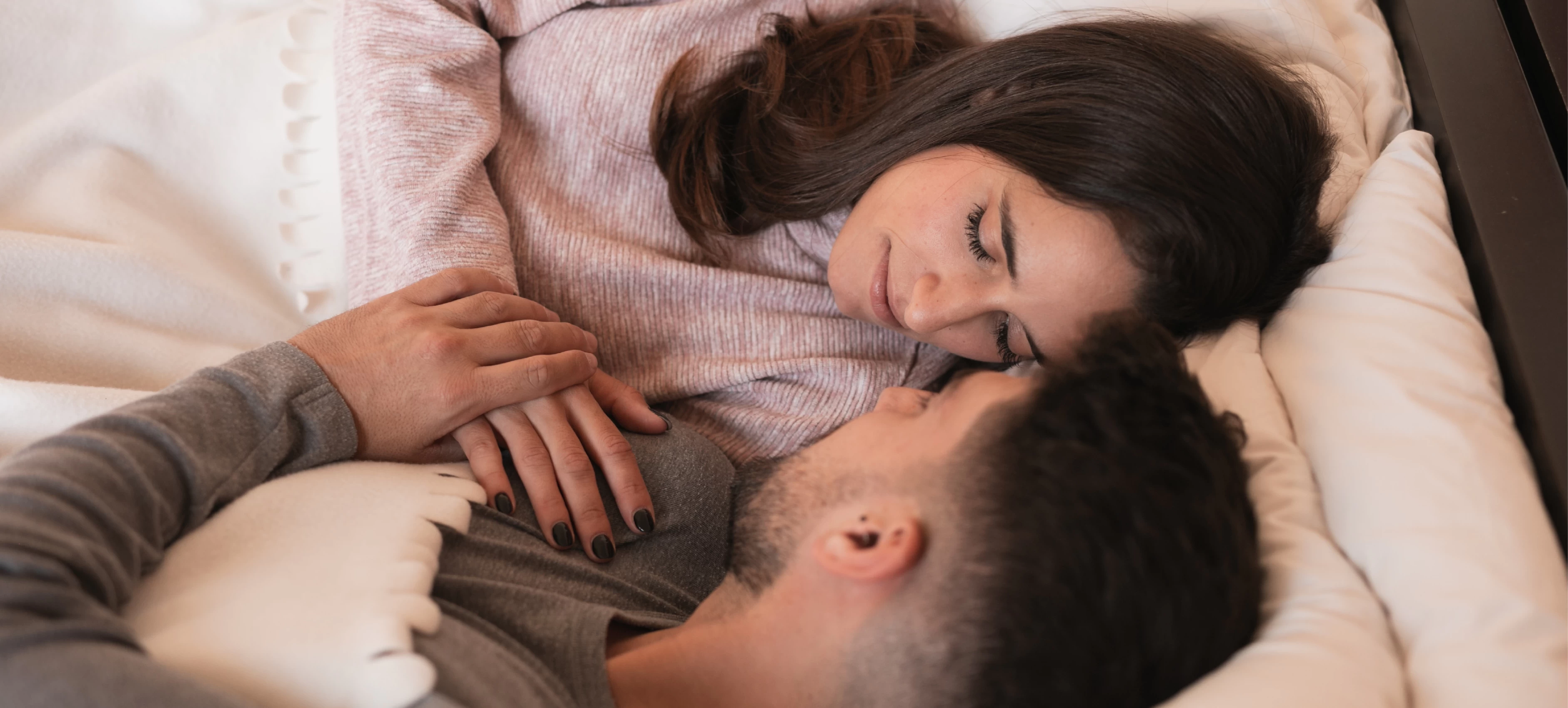
The Bedroom Triangle: Sleep, Stress & Sexual Performance
Does sex help you sleep? If you’ve typed that into the
search bar, the answer is yes. In fact, the bedroom triangle: sleep, stress,
and sexual performance all go hand in hand. When the triangle is balanced,
intimacy feels effortless, and recovery feels natural. When it isn’t, everything
can feel out of sync.
You’ve seen it in real life: a late-night deadline that crawls into bed with
you, a weekend lie-in that quietly revives desire, and a busy mind that throws
timing off. When one corner shifts, such as your rest, your stress, or your
intimacy, the other two react.
This blog unpacks the Bedroom Triangle: what’s real, what’s just pressure, and
what’s actually in your control, plus simple, consent-first habits to dial down
stress, support better sleep, and protect pleasure with safe sex.
Ready to tilt the triangle in your favour tonight?
How Do Sleep, Stress & Sex Influence Each Other?
Performance Anxiety
Performance anxiety happens when stress turns the body into a watchdog and
sleep runs short. You start checking yourself mid-moment: Is this working? Am I
off pace? That split attention slows arousal, so you check even more. Classic
loop. It isn’t a “you” problem; it’s how stress and sex clash when the nervous
system is still in work mode.
Practical tip: settle logistics before the heat. Keep well-fitting
condoms within reach and agree on them early, then take five slow breaths
together to shift from monitoring to feeling for steadier sexual performance.
Stress and Sex Share the Same Space
Stress can be overpowering. It causes shoulder tightness,
accelerates breathing, and makes your mind constantly search for problems.
While this heightened state can help meet deadlines, it can be detrimental to
intimacy. In that state, arousal is competing with a mental to-do list, leading
to stress, and sex starts stepping on each other’s toes.
Similarly, it can also lead to a lack of sleep and sex drive. A low sex drive
is primarily an issue of energy management. When you don’t get enough sleep,
your body prioritizes essential functions. This can lead to dips in mood,
reduced patience, and a lack of curiosity, highlighting the real connection
between lack of sleep and decreased sex drive.
Trying harder in this state rarely helps because there simply isn't extra
energy available.
Practical tip: guard a consistent sleep window for three nights (same
lights-out, darker room, and no heavy late dinner). As energy returns, interest
usually follows without force.
Remember: Less stress + better sleep = easier desire.
Tiredness & “Does Sex Help You Sleep?”
Short answer: often, yes. When intimacy is consented, unhurried, and
comfortable, the body naturally settles. Tired isn’t just “sleepy”; it’s a
slower reaction time, reduced attention, and less physical comfort. That
manifests as reduced stamina and feeling “off” during intimacy. So if you’ve
typed Does sex help you sleep into the search bar, the more accurate reply is:
the right kind of sex, safe, relaxed, present, often does.
Practical tip: Fix the foundation first: consistent bedtime, no
last-minute heavy meals, go screen-light for 30–45 minutes. Once fatigue eases,
arousal and comfort are easier to read, and sexual performance feels natural
instead of forced. If you still feel wiped, check daytime caffeine spikes and
late-night scrolling; they often keep the nervous system wired.
Overthinking Gets in the Way
A busy mind crowds the bed. Deadlines, messages, and to-do lists pull
attention away from touch and also delay sleep. The brain thinks it’s helping;
the body reads it as “not safe to relax,” so arousal stalls and sleep drifts
away, one clean example of sleep, mental health and sexual wellness pulling on
each other.
Practical tip: Keep the wind-down simple: park the phone, take five slow
breaths, keep touch unhurried. You’re moving from problem-solving to presence.
This supports sleep, mental health and sexual wellness, together calmer mind,
clearer body signals, and fewer timing issues. If overthinking persists, a
short “brain dump” list before bed helps close the mental tabs.
The Loop to Watch: Poor Sleep Quality
Poor sleep quality keeps the triangle tilted even when you clock the hours.
Fragmented nights raise next-day stress, and higher stress shreds tonight’s
sleep. This can diminish desire, disturb reliability, and turn sexual
performance into a task rather than a fulfilling experience.
Practical tip: Focus on improving the quality of your sleep, not just
the quantity. Try to maintain consistent sleep and wake times each day, keep
your room cool and dark, limit late-night alcohol consumption, and establish a
calming wind-down routine.
Tiny
Habits for Sleep, Mental Health and Sexual Wellness
Caffeine
Curfew (Post-2 p.m.): Avoid caffeine after mid-afternoon to ensure
deeper sleep at night and prevent jitters that may affect sexual
performance.
Morning
Light (10 minutes): Spend at least 10 minutes in natural daylight
within an hour of waking. This helps regulate your circadian rhythm,
ensuring you fall asleep on time and supporting sleep, mental health, and
sexual wellness.
60-Second
Partner Check-In: Before things get heated, ask your partner,
"What feels comfortable for us tonight?" This question can help
break the ice and ensure that stress and sex can coexist harmoniously.
Keep
a Protection Tray: Store condoms and lubricant in one accessible location. This makes things easier,
allowing for a smoother flow and fewer interruptions.
Audio-Only
After Lights Out: Instead of scrolling through your phone, listen to
low-volume music or a podcast before bed. This can help calm your mind,
promote faster sleep, and improve your overall wellness, including sexual
health.
Final Takeaway
And there you have it! The Bedroom Triangle is really just a
fancy way of saying: Take Care of Your Whole Self.
Stop trying to force desire when you're running on fumes or stressing over
a to-do list that’s crowding the bed. The truth is, when stress and sex clash,
it drains your energy and sabotages your best intentions for good rest and
great sexual performance. The trick isn't to try harder at sex or sleep; it's
to relax into a rhythm where all three corners: sleep, stress, and intimacy,
can play nicely.
(And hey, if the simple changes aren't quite tilting that triangle in your
favour, remember that dedicated support like sexual performance anxiety therapy
is always a valuable option!)
So, ditch the pressure, put those simple tips into action, and remember to keep
the conversation going (and the protection handy!). Your best nights (and
days!) start when you let the whole triangle settle into a harmonious, chill
state. Sweet dreams and safe playtime!


